%20(1).png)

A Computational Approach to Longitudinal Cognitive Recovery
Neurometry develops structured digital cognitive telemetry and within-person modelling frameworks to quantify and qualify recovery trajectories following brain insult
Where neuroscience meets digital innovation.

Foundational Principle
Neurometry's core task architecture is built on IP secured from the University of Bern, where the founding team conducted Novartis Foundation-funded research
Within-Person Longitudinal Modelling
Traditional cognitive assessment relies on episodic testing and population norms.
Neurometry prioritises repeated measurement within the same individual over time. By establishing a personal baseline and modelling change across sessions, the system is designed to detect deviation from expected recovery trajectories.
The focus is on change — not single time-point scoring.
Task Architecture & Signal Design
Structured engagement tasks are engineered for:
• Language independence
• Repeated administration with controlled practice effects
• Accessibility in aphasia and motor impairment
Each interaction generates high-resolution behavioural telemetry, including:
• Reaction time distributions
• Accuracy variability
• Learning progression
• Error-type patterns
• Intra-session fluctuation
All interactions are event-logged and time-stamped to enable longitudinal analysis.
Digital Signal Processing
Raw behavioural logs are transformed into structured cognitive features through layered processing, including:
• Noise filtering
• Temporal smoothing
• Baseline normalisation
• Multidimensional feature extraction
The result is stable digital cognitive biomarkers designed for longitudinal comparability.
Trajectory Modelling
The modelling framework supports:
• Individual baseline establishment
• Rate-of-change estimation
• Variance banding over time
• Detection of divergence from expected recovery patterns
This supports classification of cognitive trajectory during defined post-insult recovery windows.
Neurometry functions as a clinical decision-support system and does not replace formal neuropsychological assessment.
Neurometry works alongside leading institutions to develop and validate digital biomarkers, namely:
-
University of Bern and Research Psychiatric Hospital
-
King’s College and NIHR Brain Health Research Centre
-
UCL Neuroscience
-
University of Plymouth and NHS Cornwall Trust
-
University of Birmingham
-
University of Cambridge and NIHR Brain MIC

Our Collaborators
Research Evidence Chain
Clinical Evidence and Scientific Foundations
Neurometry builds on a portfolio of peer-reviewed research investigating serious game-based cognitive assessment and training across memory, attention, and executive function domains. These studies demonstrate the feasibility of using structured digital tasks to measure cognitive performance and behavioural change over time, forming the scientific basis for Neurometry’s longitudinal cognitive telemetry platform.
Paper 1
Clinical deployment in post-stroke aphasia (2019)
The founding team’s earliest clinical deployment work a tablet-based telerehabilitation platform for post-stroke aphasia patients, developed with the University Hospital Bern. The system was designed to function without reliable verbal or written communication from the patient, using non-verbal task formats that adapt to individual impairment profiles. Rated excellent by patients on usability. 166 patients completed nearly 83,000 exercises. This work established the non-verbal task architecture that directly underpins Neurometry’s stroke and neurorehabilitation pathway — and explains why the platform is well-suited to post-stroke aphasia populations that competing solutions cannot reach.


Paper 2
Digital biomarker validation: maze-like puzzle games (2020)
The foundational instrument validation study. Game-based performance metrics — solving time, movement velocity, direction changes, planning time — correlated significantly with gold-standard neuropsychological tests for psychomotor, attentional, visuospatial, and executive function. Validated across healthy aging, MCI, Parkinson’s disease, and Huntington’s disease populations. Critically, the tasks are non-verbal, simple to understand, and relatively independent of educational level — the same property that makes them directly applicable to post-stroke aphasia and other populations that verbal assessments cannot reach. Each game session simultaneously captures cognitive planning time and motor execution telemetry: two signal streams from one naturalistic interaction.
Paper 3
Eye-tracking as adjunct cognitive signal (2021)
Urwyler, Falkner et al. JMIR Serious Games (2021).
Established that gaze fixation patterns captured during game sessions correlate with executive function test performance — validating eye movement metrics as adjunct cognitive biomarkers extractable from the same task interaction. This paper confirms that the platform’s behavioural signal architecture can be extended to include oculomotor data within a single naturalistic session, without dedicated hardware. Cite on Science page as supporting evidence for the multimodal signal layer; do not foreground as a product feature until consumer camera integration is live.


Paper 4
AI-adaptive deployment at home (2023)
Demonstrated that AI-personalised difficulty adaptation enables the validated game instruments to be deployed longitudinally and unsupervised at home, sustaining engagement across weeks without practice ceiling effects or floor-effect collapse. The AI system continuously models participant ability and adjusts difficulty in real time — the same architecture now embedded in Neurometry’s platform. Participants showed significant improvements in visual attention and visuospatial measures. This paper establishes that repeated, home-based game interactions are scientifically valid longitudinal measurement events — not just engagement features.
Paper 5
The measurement-first insight: large-scale RCT (2024)
The pivotal RCT (n=160) that reframes the commercial thesis. The study found no structural brain changes from cognitive training — but adherence was exceptional, averaging nearly five sessions per week across months. The key insight: training effects are a cumulative product of repeated interactions, which are technically measurements. Given the heterogeneous nature of brain insult and phenotypic variation in recovery, the measurement infrastructure has greater commercial value than any training effect. Each session generates within-person baseline data and deviation signals that single time-point assessments cannot produce. This paper is cited on the Science page not as evidence that the games “work” as training, but as the foundational study that established the longitudinal behavioural signal architecture Neurometry is built on.

Clinical Researchers at University of Bern Research Psychiatry Hospital
Prof. Dr. Stefan Klöppel
Dr. Esther Brill
He is a senior clinician and academic with a specialization in old age psychiatry, psychotherapy, and neurodegenerative disorders. He has taken on key roles in university and memory clinics, blending clinical leadership with advanced expertise in brain imaging and psychiatry. His experience spans neurology, psychiatry, and clinical research prominent medical centers in Germany and the UK. His research emphasizes cognitive disorders, clinics, and the incorporation of neuroimaging into psychiatric practice.
She is a psychologist and neuroscience researcher specializing in memory, learning, and cognitive processes particularly in old age psychiatry and psychotherapy. With a psychology degree from the University of Bern focused on learning mechanisms and memory, she also holds a degree in economics and management. She completed her doctoral training in old age psychiatry and is now a postdoctoral researcher studying memory, cognition, and neuropsychiatric disorders in aging populations.
Mike Falkner
Has worked in Game engine and game development technologies for 10 years. A Software Engineer degree with a focus on video games, he started in the film industry creating bespoke software solutions using game engine technology used in The Meg, Avatar and Cowboy Bebop. In Switzerland, he has been developing cognitive training games and solutions at University of Bern
Active Research Programs

1
Post-stroke to vascular dementia pathway
Dr Latha Velayudhan & Dr Christoph Mueller, KCL / South London & Maudsley NHS Foundation Trust. Longitudinal cognitive monitoring and eHR integration.
2
Learning disability and constipation management
Prof. Rohit Shankar, University of Plymouth / NHS. Application of Neurometry framework to LD comorbidities; gamified clinical tool in co-development for NHS distribution.
3
Social Cognition
Dr Antonia Hamilton, UCL Neuroscience / University of Birmingham. Game-based digital biomarker capture for ASD phenotypes; language-free tablet tasks in co-development for paediatric and neurodiverse populations.
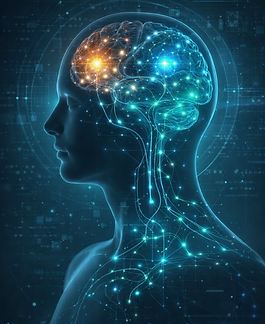
Cognitive skills are the core mental abilities the brain uses to process information, make decisions, and interact with the world. These skills are essential for daily functioning, independence, learning, and recovery after neurological events.
Neurometry focuses on measurable, trainable cognitive domains that are commonly affected by stroke, brain injury, neurodegenerative conditions, and neurodevelopmental differences.
WHAT ARE COGNITIVE SKILLS?
Understanding Cognitive Skills

COGNITIVE DOMAINS WE TARGET
Key Cognitive Domains We Measure & Train
Attention
The ability to focus, sustain concentration, and filter distractions.Critical for reading, conversations, and task completion.
Working Memory
Holding and manipulating information over short periods.Essential for problem-solving, learning, and daily planning.


Visual-Spatial Skills
Understanding spatial relationships and visual patterns.Important for navigation, object recognition, and coordination.
Executive Function
Skills that govern decision-making, inhibition, flexibility, and goal management.

Processing Speed
How efficiently the brain perceives, interprets, and responds to information. Slowed processing can affect confidence and independence.